




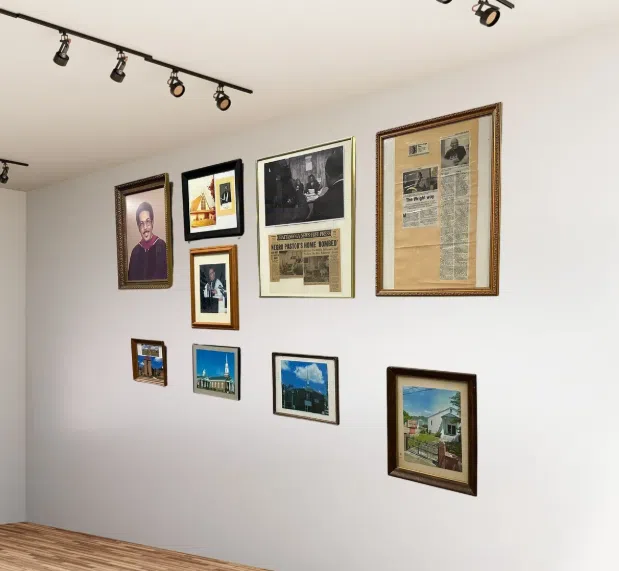
Chattanooga, Tn known as the Scenic City, is compiled of many neighborhoods that has helped make up significant moments in this nation’s history. Over time, however some of those moments are forgotten or overshadowed by reform or even new chapters being written. What then happens is, the past either repeats itself (in either a positive or re-traumatizing way) or leaves the future struggling with an identity crisis and no sense of direction.
In honor of Black History Month with a focus on the African American Community, we take time to explore and also revive the memory of people, places, inventions, and more that has created the very DNA of both the city of Chattanooga and the people who continue to evolve within it.
My journey begins with a stop in the Alton Park neighborhood at a building formerly known as Piney Woods Elementary School. It was built in 1963 at the height of civil rights movement and closed in 1985. Today, the structure has been transformed into the African American Educational & Heritage Museum by the Alton Park Development Corporation.
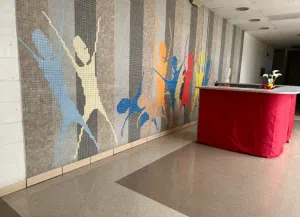 The 48,000-square-foot space includes a community garden, event hall, multiple black history exhibits, an office space dedicated to the Chattanooga News Chronicle, a library, a history room and a computer lab. In addition to these features, the organization says they are also working to develop affordable housing in the area.
Although the facility has been repurposed, some of the original furniture and designs still remain. This thoughtful preservation allows former students to feel connected to their roots meanwhile first-time visitors an authentic feel of history.
 Upon arriving at the facility, I was given a tour of the museum by Johnny Holloway, who began with an entertainment wall that features artist that have Chattanooga ties including Samuel L. Jackson, Rueben Studdard, Usher Raymond, Anne Lee ‘Ms. Pat’ Patton, Kane Brown, and more.
From there we moved to two powerful walls, one dedicated to former President Barack Obama and the other, of the late Dr. Martin Luther King Jr. Interesting enough while I was looking at Dr. King Jr’s wall, I noticed multiple pictures of legendary singer Mahalia Jackson alongside him. Holloway explained to me that Jackson was very supportive of King and even encouraged him to do the ‘I Have A Dream; Speech in Washington, D.C.
As we continued walking down the hall, we stopped at a photo of the original Statue of Liberty where the figure has chains at her feet and is carrying a lantern with symbolically connected to the Underground Railroad. This was something I never knew existed.
Next, came a wall highlighting religious components, including the Bible and an image of the last supper. As the Holloway shared during the tour, “The Bible is not just a religious book but a history book and a book of history of people of color“.
This section was then followed by another of images depicting African royalty before and after Christ, reminding visitors of a lineage of leadership and legacy that stretches back centuries
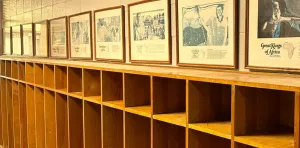
We then passed the history room which will serve as an educational space, teaching Black History before entering a hallway honoring Historically Black Colleges and Universities. The display includes school apparel, plaques, and photographs celebrating HBCU pride and impact.
Further along, we encountered exhibits spotlighting black led organizations such as the Black Unity Group which focused on social justice, equality and, political empowerment for Black people. Another featured organization was Operation P.U.S.H. (People United to Serve Humanity), a Civil Rights organization spearheaded by Rev. Jesse Jackson.
As we continued walking, Holloway pointed out a picture of a woman he identifies as his sister. He reveals that she was responsible for introducing the idea of a Black Santa Clause Figure to the public School System here in Chattanooga.
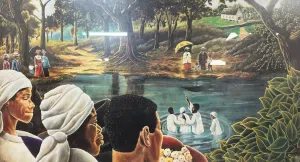 Before nearing the end of the tour, we come across another religious themed wall. This one the images are more creative but still rooted in influential components of Christianity.
Nearby was a publications wall featuring books, newspaper articles, and documentary posters highlighting racially motivated incidents and notable historical moments in the area.
One Exhibit I can’t forget to mention, is the invention display showcasing creations that have shaped our culture and life in terms of convenience and safety such as the almanac, clock, cotton chopper, fire extinguisher and modern traffic lights.
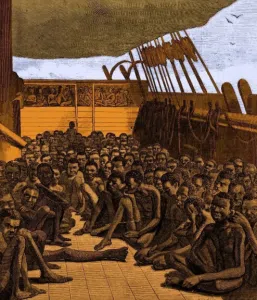
Close by stood the marquee of the museum, a replica of a slave ship complete with little figurines illustrating how slaves were transported on the vessels. Beside it was a book containing the names of all the ships that participated in the Transatlantic Slave Trade.
 We then wrapped things up in a section designated to The Howard School, recognized as the first school for Black students in Chattanooga and the first free public school in Hamilton County.
Before I exited the building, I couldn’t help but marvel at everything I learned and saw inside the African American Educational & Heritage Museum. It is truly a captivating living time capsule needing to be widely seen, supported and explored not just for the city but for our people.
For those planning a visit, the building is open every day from 10 a.m. – 2 p.m. and fully closes at 6 p.m. throughout the winter months and 8 p.m. through summer months.



Comments